EconEdLink Navigation BarStandards Contact Lessons Current Events WebLinks DataLinks CyberTeach
A premier source of classroom tested, Internet-based economic lesson materials for K-12 teachers and their students

Online Lesson

About this lesson
grade level: K-2, 3-5
EconEdLink Line Break
curriculum standards:
1 4

EconEdLink Line Break
author: Abbejean Kehler
EconEdLink Line Break
More lessons from this author
EconEdLink Line Break
posted on: January 20, 2003
EconEdLink Line Break
State Standards
EconEdLink Line Break
Printable Glossary
EconEdLink Line Break

EconomicsMinute

The Little Red Hen

Key Economic Concepts:

Description:

The Little Red Hen is a classic story for nearly all adults, and many children. Here it is retold and enhanced in order to provide a framework for illustrating and reviewing the concepts of productive resources and incentives. After reading the story, students will categorize resources into land, labor, capital and entrepreneurship and be able to identify what future incentives the dog, the cat and the mouse will have to help the little hen in her work. Students will have the opportunity to explore bread making.


Lesson Objectives:

Students will:

  • Identify and review productive resources (CELL) – capital, entrepreneurship, land and labor
  • Sort and categorize items as capital, entrepreneurship, land or labor.
  • Describe future incentives for the dog, the cat and mouse.
  • View bread mixing
  • Explore the ingredients for making a loaf of bread
  • See equipment needed to make bread
  • Watch a bakery making a pastry

Introduction:

chicken

Have you ever worked hard on a project and found that no one would help you? Then when you got it all done, suddenly everyone wanted to participate, or use your creation? You have something in common with a little Red Hen. Read the story and see if it’s like an experience you might have had, perhaps putting together a skate board ramp, building a fort, growing a pumpkin or carefully setting up your action figures.


Resources:

•"Making Easy Bread with Fin ": Fin teaches his peers how to make bread.
www.youtube.com/watch?v=OCuWEMtB68o&feature=related [1]

•"New Grist for an Old Mill": Learn about a real working mill in Canada, the Dover Flour Mill.
www.dovergrp.com/ [7]

•"Fun with Dough. . . The Real Kind of Dough": A website for kid's making real dough.
www.breadworldcanada.com/justkids/dough.asp [3]

•"Baking Ingredients": Ingredients for making bread
www.breadworldcanada.com/tipsterms/begintipsi.asp [4]

•"Baking Equipment": Basic tools for baking bread
www.breadworldcanada.com/tipsterms/begintipse.asp [5]

•"GO": Procedure for mixing bread
www.breadworldcanada.com/tipsterms/begintipsd.asp [6]

•"AmosWEB ECONOMIC - GLOSS*arama: This website provides economic information and definition. www.amosweb.com/cgi-bin/awb_nav.pl?s=gls [8]

-PRODUCTION: The process of transforming the natural resources of the land into consumer satisfying consumption and capital goods using scarce resources. In a world of scarcity, with unlimited wants and needs and limited resources, living standards are enhanced by transforming the planet's raw materials, that don't provide much satisfaction in their natural state, into goods, that provide more satisfaction.

-RESOURCE: The labor, capital, land, and entrepreneurship used by society to produce consumer satisfying goods and services. Land provides the basic raw materials--vegetation, animals, minerals, fossil fuels--that are inputs into the production of goods (natural resources). Labor is the resource that does the "hands on" work of transforming raw materials into goods. Capital is the comprehensive term for the vast array of tools, equipment, buildings, and vehicles used in production. Entrepreneurship is the resource that undertakes the risk of bringing the other resources together and initiating the production process.

-ENTREPRENEURSHIP: One of the four basic categories of resources, or factors of production (the other three are labor, capital, and land). Entrepreneurship is a special sort of human effort that takes on the risk of bringing labor, capital, and land together and organizing production.

-NATURAL RESOURCES: A material source of wealth, such as timber, fresh water, or a mineral deposit, that occurs in a natural state and has economic value

-HUMAN RESOURCES: The persons employed in a business or organization; personnel.

-CAPITAL RESOURCES: Wealth in the form of money or property, used or accumulated in a business by a person, partnership, or corporation.

•"Dictionary.com": This website provides definitions of words. http://dictionary.reference.com/ [9]

Process:

In order to provide a context for your lesson on production and resources, first read The Little Red Hen (story) with your students. Keep in mind there will be several elements to identify in the story:

  • production – what are the steps in producing a loaf of bread
  • resources – what natural, human and capital resources are needed in the production process.bread

Once you and your students have read the story, here are several activities you may choose to use with your students:

  1. Production is carried out in a “sequence” or “steps.” What steps were involved with the production of the loaf of bread? Review the story by completing the  Drag and Drop Activity [Story Order; Found the wheat seeds, Planted the seeds, Watered the garden, Pulled the weeds, Harvested the wheat, Went to the miller, Ground the wheat, Read the recipe, Mixed the ingredients, Baked the Bread, Ate the Bread]
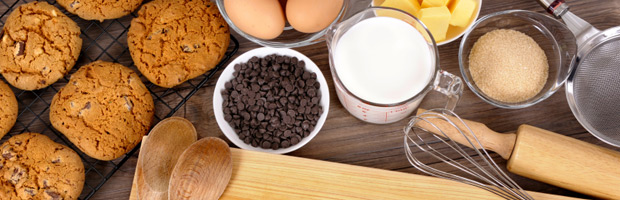
  2. Recipethe students might review – have small groups of students read the recipe and make a list of the ingredients – point out that these are natural resources.
  3. Just for fun – challenge your students with: Oven Baked Bread - word search
  4. The use of a recipe typically involves fractions and other measurements. Here is an opportunity to have your students apply a bit of math review, click and print: Knead Math? Student Version Doubling fractions activity [Knead Math? Teacher Version]
  5. Have you ever seen bread being mixed? Watch Making Easy Bread with Fin [1] to see a video clip of how to make a loaf of bread.
  6. There are still some mills around, take a look at these pictures at a working mill in Oklahoma, Yukon Flour Mil [2] .
  7. Go to the Beginners Kitchen [3] . Be sure and scroll down, as you page through the site and you will find a great explanation of what is “dough.”
  8. Go to the Baking Ingredients [4] site and look for the natural resources used in producing a loaf of bread.
  9. Go to the Baking Equipment [5] site and look for all of the capital resources used in producing a loaf of bread - Tools (Capital) for Making Bread
  10. Go to Making Bread [6] and identify the steps in producing a loaf of bread and see what procedures are required to get the perfect loaf (production process).

Conclusion:

Most children do not have the opportunity to see or feel where an every day loaf of bread comes from or how it is made. The Little Red Hen not only helps to introduce the process, but gives the students an opportunity to reflect how they might feel if they did the work on a project or activity and others expected to benefit. Close the lesson by inquiring of the students how Meow, Bark and Squeak might behave in the future, and if there is an incentive for them to change their ways.

Assessment Activity:

Using pictures or words have students create cards of the ingredients, tools and individuals involved in making bread. You should prepare at least 15-30 in total. Have students sort these into productive resources - human, natural, capital or entrepreneurial. Have each student write down their answers for review by the teacher or another student. Students may use the word search to help in identifying many of the terms used in this lesson.

You also might create matching sets of cards and have the students use them to play concentration. For example you have a picture of a mixing bowl and the word capital in order to create a match.

Extension Activity:

Your students might choose to look at what yeast is and the science behind the "rising" of bread.

Visit "Why does bread rise?" [10] site to learn about what makes bread rise and to try a simple experiment.

Links Used:

1. ^ ^ "www.youtube.com/watch?v=OCuWEMtB68o&feature=related" - (www.youtube.com)
2. ^ "Yukon Flour Mil" - (millpictures.com)
3. ^ ^ "www.breadworldcanada.com/justkids/dough.asp" - (www.breadworldcanada.com)
4. ^ ^ "www.breadworldcanada.com/tipsterms/begintipsi.asp" - (www.breadworldcanada.com)
5. ^ ^ "www.breadworldcanada.com/tipsterms/begintipse.asp" - (www.breadworldcanada.com)
6. ^ ^ "www.breadworldcanada.com/tipsterms/begintipsd.asp" - (www.breadworldcanada.com)
7. ^ "http://www.dovergrp.com/" - (www.dovergrp.com)
8. ^ "http://www.amosweb.com/cgi-bin/awb_nav.pl?s=gls" - (www.amosweb.com)
9. ^ "http://dictionary.reference.com/" - (dictionary.reference.com)
10. ^ ""Why does bread rise?"" - (www.darngoodbread.com)


Teacher Reviews

December 17, 2006
Excellent lesson! It is so unfortunate we tend to forget such valuable stories as the little red hen. Thank you!

February 2, 2009
Good job. I love the lesson.

January 24, 2008
I thought this story was about me! I go to the grocery store, unload the groceries (no one around), put away the groceries (no one around), cook dinner (everyone is sitting at the table), and then it's time to clean up (no one is around)! I know the feeling.

October 11, 2008
I totally enjoyed the entire lesson and the accompanying links. I can't wait to use this lesson with my 3rd graders and share it with my co-workers!

February 18, 2009
Good lesson.

June 4, 2009
Wonderful story! I loved it! Best story in the world! But remember, Reddy (the hen) wasn't meant to share the bread because they didn't help her!


Insert a comment, suggestion or review of this lesson here. The comments will not appear immediately due to a time delay to allow for a review by a member of our staff.