Online Lesson
About this lesson
grade level: 9-12
![]()
curriculum standards:
1
2
10
14
16
![]()
![]()
More lessons from this author
![]()
posted on: August 5, 2005![]()
State Standards
![]()
Printable Glossary
![]()
Teacher's Version
This lesson provides you with the resources that you will need to teach this lesson. We have also provided a link for your students to follow this lesson online. The link below contains only the information your students need:
New Sense, Inc. vs. Fish 'Till U Drop or Coase Vs. Pigou
Key Economic Concepts:
Hot debate and arguments galore whirl around this question: "Which economic approach is the most efficient and fair to resolve utility issues surrounding the use of common or public property?" This lesson will explore, examine and analyze this perplexing question by engaging in an open-ended role play simulation.
Students will:
The debate among economists rages stronger than ever: whether the Coase Theorem or a Pigouvian tax works more effectively in cases involving environmental use and misuse. "Pigouvians" accuse "Coasians" of being right-wing radicals who would provide the rich and powerful with unfair advantages in the use of common or public property. "Coasians" accuse "Pigouvians" of disloyalty to the fundamental economic principle that well-defined property rights always bring about the most efficient use of a resource. Economists must decide which theorem or problem of how well the property rights are defined. They must also decide what, if any, are the transaction costs, and how many people are actually touched by the problem. Using on-line resources to gather information, the students will engage in a simulation activity designed to help them examine both sides of the controversy. They will learn about public and private property, the tragedy of the commons, and externality issues while assuming the role of New Sense, Inc. or the Fish Till You Drop Association.
Note: If a student wishes to use this lesson as an independent study project, the following procedures may be followed.
Lessons to consider before beginning this lesson:
NOTE: This lesson covers many complex concepts and may need additional time to cover all material sufficiently.

1. Ask the students who should be responsible for cleaning up pollution. The students may respond that polluters should clean up pollution, or that the government should more closely monitor people or businesses that have a bad pollution record. Accept any answer that is reasonable, and list the responses on the board.
2. Remind the students that economics is concerned with marginal costs and benefits. Since our resources are scarce, we must decide the amount of pollution we can live with. In order to have a pollution-free world, people would have to give up many other things. Ask the students to think of some of other expenditures. (Money spent to clean up pollution could also be spent on education, roads, crime prevention and public health programs, for example.).
3. Ask the students who usually provides for education, roads, etc. (The government does.). Why does the government provide for these vitally important things? ( The government provides for these items because they are very important and because they might not be provided for by private enterprise.). Tell the students that economists call these items market failures.
4. Explain to the class that economists have identified several types of market failures. One type is a monopoly where there is a failure of competition. One recent example: Microsoft. In this example, Microsoft's rivals in the computer software industry, showed that Microsoft had attempted to develop its dominant position in operating systems software (such as Windows) to gain a dishonest advantage, in creating a monopoly in operating systems. Microsoft also created a monopoly in sales of its applications software (like Microsoft Word).
5. Project Visual 1, Public Goods, and discuss the information. Explain that this is another type of market failure.
6. Project Visual 2, Tragedy of the Commons, and discuss the information. Explain that the plight of the commons in Lloyd's day might be similar to problems of over-fishing in our times. Emphasize that the problem in each case is directly related to the lack of clearly established property rights.
7. Project Visual 3, Externalities, and discuss the information. Explain that the problem of pollution is very complex because it involves several kinds of market failures, and there have been three major methods suggested to solve the problem. The solution most frequently used is similar to the one involving a messy room
8. Encourage the students to provide additional examples of positive externalities such as vaccinations and education. Emphasize that externalitites affect "third parties."
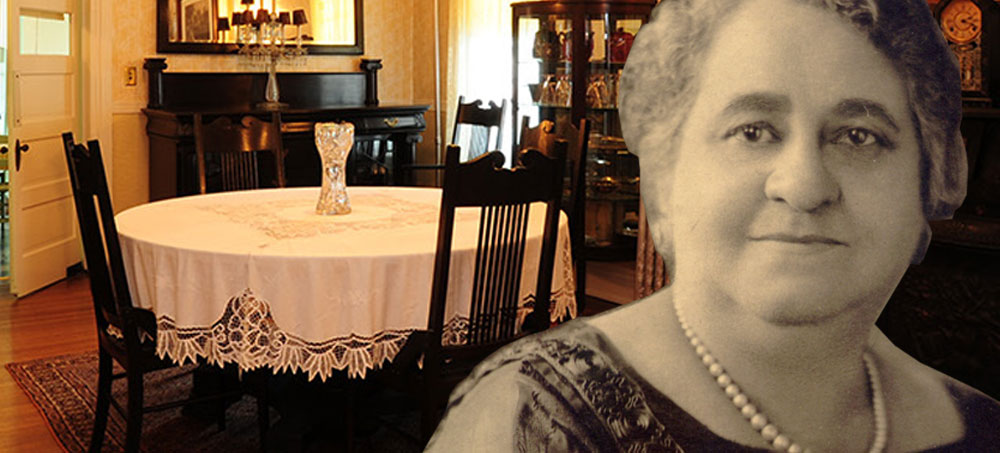
9. Tell the students that two additional methods of dealing with pollution have been suggested by famous economists. Project Visual 4. Tell the students that Visual 4 depicts Arthur Pigou, a British economist who did most of his work in the early part of the 20th century. Then discuss the contents of the visual. Clarify the point that the tax charged would attempted to equal the value of the damage caused. Point out that, in the case provided, the firm would need to "internalize the externality."
10. Project Visual 5. Explain to students that this visual depicts Ronald Coase, an economist who won a Nobel Prize and who wrote two very influential and controversial books in the last half of the 20th Century, (The Problem of Social Costs, and The Firm, the Market, and the Law.). Discuss the contents of Visual 5. Point out that the "cost of exchange" or the "transaction or negotiation costs" must be low or negligible and the number of parties involved must be small.
11. Project Visual 6. Tell the students that the chart helps to explain the Coase Theorem. Coase suggested that in certain cases it might be more efficient for the victim to assume some or all of the costs of pollution. (You may wish to create a student handout of the questions on this visual.).
12. Have students respond to the questions on Visual 6:
13. Here we turn to the simulation activity. To prepare for the simulation you will need a copy of Student Handout 1 for each student and the following props: (1) a lake prop (either some aluminum foil to spread out as a lake or put the desks or chairs in a cirlce to simulate the lake; (2) some "valuable items" to trade, such as pencils, pieces of cloth to represent blankets, candy, free homework passes, etc.; (3) three or more Smiley Face cards for students to hold; (4) a Fish Till U Drop sign; (5) a New Sense, Inc. sign; (6) string for fishing.
14. Announce to the class, "Today, you're going to have an opportunity to analyze and debate whether the Coase Theorem or the Pigouvian tax method is the more efficient for use in solving pollution problems concerning common property and public goods externalities."
15. Assign parts to students based on the following guidelines:
| For a class of 20 | For a class of 30 |
| 4 Fish parts | 6 Fish parts |
| 1 Bear part | 2 Bear parts |
| 1 Waterfowl part | 2 Waterfowl parts |
| 5 Fisherpeople | 7 Fisherpeople |
| 4 Traders | 6 Traders |
| 5 New Sense, Inc. people | 7 New Sense, Inc. people |
16. Once the students are assigned parts, provide them with the appropriate props. Fish get Smiley Faces; Fisherpeople get FTUD signs, Smiley Faces and string; Traders get valuable items; New Sense people get New Sense, Inc. sign and Smiley Faces.
17. Distribute a copy of Student Handout 1 to each student and instruct the students to use the props to prepare a mime that will illustrate the action in the play that involves their characters. They should not prepare a script because they will not be permitted to talk--only to act out their parts.
18. Allow the students 15 minutes to prepare. While they are preparing, set the stage for the play by creating Lake Smiley (using the aluminum foil or a desk / chair circle).
19. Invite the students to gather around Lake Smiley. Read the play while the students act out the action.
20. Once the play is concluded, tell the class they are going to decide which method (Coase Theorem or Pigouvian tax) would provide a better conclusion to this play. Regroup the students into two teams. Have the New Sense people, the Traders and the Waterfowl form the group who will research and represent the Coase Theorem advocates. The Pigouvian tax advocacy group will be made up of the Fish, Bear(s) and Fisherpeople.
21. (Optional) Have the students visit selected web sites to access relavent research materials or the teacher may download the articles and make copies for each student in each of the groups.
Instruct the groups to read and discuss their articles. Check for understanding as necessary. Be available to each group to provide help. Then, using the information they have studied, the studnets should prepare a conclusion that would support their position and end the play. They should be given 45 minutes to an hour to complete this portion of the lesson.
22. Allow each group to present its conclusion. The entire class may again be involved in the play depending on what the students create. Coase advocates should come up with a court case (transaction costs) that might assign property rights to either side. The side that is assigned property rights would be responsible for dealing with the pollution problem. The Pigouvian Tax people should propose to levy a tax and use the money to clean up the pollution.
23. When both groups have presented their endings, ask the students to define transaction costs. (Legal costs involved in taking a pollution problem to court so property rights can be assigned.) Also ask the students to define free rider. (The problem that some people will not assume their share of financial responsibility for the maintenance of common or public property, and they therefore enjoy the benefits without cost to themselves while at the same time adding additional costs to those who do assume the financial responsibility.)
24. Review the terms in this lesson by displaying and discussing Visuals 1, 2, 3, 4, 5 and 6 again. Then invite the students to give their opinion as to which side they would support.
Once the activity is complete and you have had a class discussion, you could have the students do the following:
1. See how well students understand the concepts presented in this activity by taking this quiz.
2. Teachers may use any of the essay suggestions for assessment purposes.
3. Teachers may use the classroom presentation suggestions for assessment purposes.
Links Used:
1. ^ ^ "www.daviddfriedman.com/Libertarian/The_Swedes.html" - (www.daviddfriedman.com)
2. ^ "www.huppi.com/kangaroo/L-chicoase.ht7 New Sense, Inc. people" - (www.huppi.com)
3. ^ "www2.hunterlink.net.au/~ddhrg/econ/ext1.html#pigtax" - (www2.hunterlink.net.au)
Insert a comment, suggestion or review of this lesson here. The comments will not appear immediately due to a time delay to allow for a review by a member of our staff.
Follow us